
For the family
Clearer expectations
Everyone can see what needs to happen, instead of responsibilities living only in a parent's head.
Jepify by DynamikUs
Jepify helps children practise independence through everyday routines, positive feedback and visible progress, with parents guiding from the side.
Research-informed · child-centred · privacy-first
Responsibility starts with support. The parent is close by, the child does the work, and the help steps back over time.

For the family
Everyone can see what needs to happen, instead of responsibilities living only in a parent's head.
For parents
Jepify carries more of the routine while you stay in control of what matters.
For children
Children can see what is theirs, experience progress and gradually take responsibility for more.
Capability grows in ordinary family moments, one routine at a time.

Parent and child set up responsibilities and routines, starting from ready-made templates or your own.
The child sees a simple next step in their day and marks it done.
Jepify makes effort and follow-through visible, and the parent acknowledges when it matters.
As routines become reliable, the parent can step back and the child can own more.
Allowance and rewards are optional tools, not the purpose of the system.
Jepify is designed to turn repeated support into growing independence.
From a first small job to a routine that is fully their own.

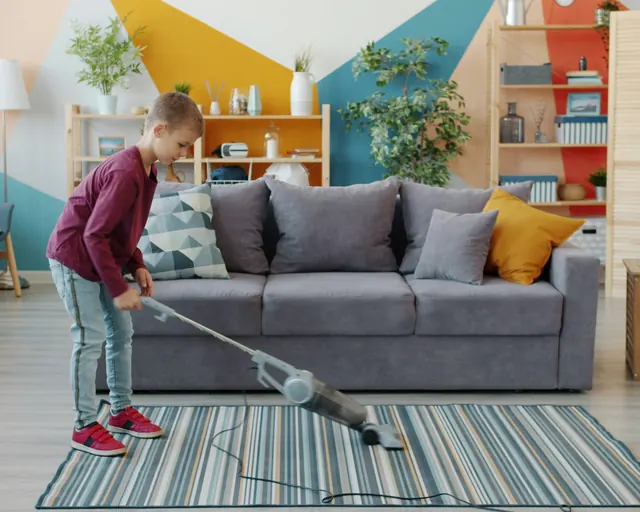
The important action happens away from the screen.
Personal progress matters more than comparison. No sibling rankings, no streak punishment.
Rewards can help start a routine. Confidence and ownership should increasingly take over.
When a child no longer needs Jepify for a responsibility, Jepify has done its job.
Turning up, doing their part and being someone others can count on. What a child practises at home goes with them to the team, the classroom and their friendships.

Planned
Jepify is being built so that each family member can use it in their own language, with the same responsibilities, progress and agreements shared between them.
Jepify's design is informed by research on autonomy-supportive parenting, children's competence, process-focused feedback, household responsibility, routine formation and the careful use of rewards. We say designed to support, not proven, until Jepify has its own outcome evidence.
Give children increasing ownership.
Make success understandable and visible.
Keep acknowledgement between parent and child.
Pricing
Jepify Free covers the whole responsibility loop for one child and does not expire. Jepify Family adds more children and deeper capabilities. Nothing is billed during early access.
These are design commitments. The privacy draft explains each of them in more detail.
A parent creates the family, adds the child and decides what the child can see and do.
Jepify collects the minimum it needs to run. Children are never asked for details on this website.
There is no social feed and no comparison between siblings or other families.
Jepify is designed so that usage analytics on a child's device run only with consent. For a younger child that is the guardian's; a child the family marks as deciding for themselves can give or withdraw it on their own. Essential crash and reliability reporting is always on and contains no product behaviour.
We are inviting a small number of families to try Jepify before launch. Parents only; we never ask children for details.
Sign-up opens soon.
Until then, write to hello@dynamikus.com with your country and whether your family uses iPhone, Android or both.
A family app that helps children practise independence. Parents set clear expectations, children see what is theirs and mark it done, progress becomes visible, and parents can gradually step back.
School-age children. One app adapts how much guidance and visual support it shows, so a younger child and a teenager can both use it without it feeling childish or like an office tool.
Yes. Each child uses Jepify on their own phone or tablet, connected to the family by a parent. A shared family device is not supported.
No. Ordinary responsibilities can stand on their own. A family can add a weekly allowance, extra paid jobs, bonuses or non-money rewards, or use none of them.
If your family chooses to use it, you and your child agree a weekly allowance and which responsibilities it covers. The week is reviewed together. Jepify never withholds an allowance on its own, and a single missed day never deducts money.
Jepify collects the minimum it needs, a parent controls the family set-up, and Jepify is designed so that usage analytics on a child's device run only with consent: the guardian's, or the child's own once the family marks that the child decides for themselves. Essential crash and reliability reporting is always on and contains no product behaviour. A full privacy page for Jepify will be published before launch.
No. The important action happens away from the screen. As a routine becomes reliable, Jepify should need fewer prompts and less of the child's attention, not more.
We are starting with a small number of families. Join early access and we will contact parents directly when the next family test opens.
Jepify is being built for iPhone and Android, with the same core experience on both. We will say clearly when each is available.